Case study

A private gallery of digital artwork that hangs a new exhibition on demand.
The client collects art. He owns a lot of the real thing, and he had become interested in what generative models were starting to produce. What he wanted was a way to change every piece on show at once, by describing the style he was in the mood for.
So the house was fitted with Samsung Frame displays, mounted in a mix of landscape and portrait through the hallways and living space, and behind them a system with one job: take a description and generate original digital artwork for every display in the property.
"I want to type an idea and have every piece in the house change."
That was the brief. Not a library to manage or a screen-by-screen picker: one description goes in, and every display in the property changes together, in about a minute.
One box, one description
There is a single box, and it takes a plain description of what he would like on the walls. "A dramatic California beach sunset, in the style of Monet." Or "brutalist concrete, heavy shadow, black and white." Whatever he describes, the art comes back painted in that style, and that is the only decision he has to make.
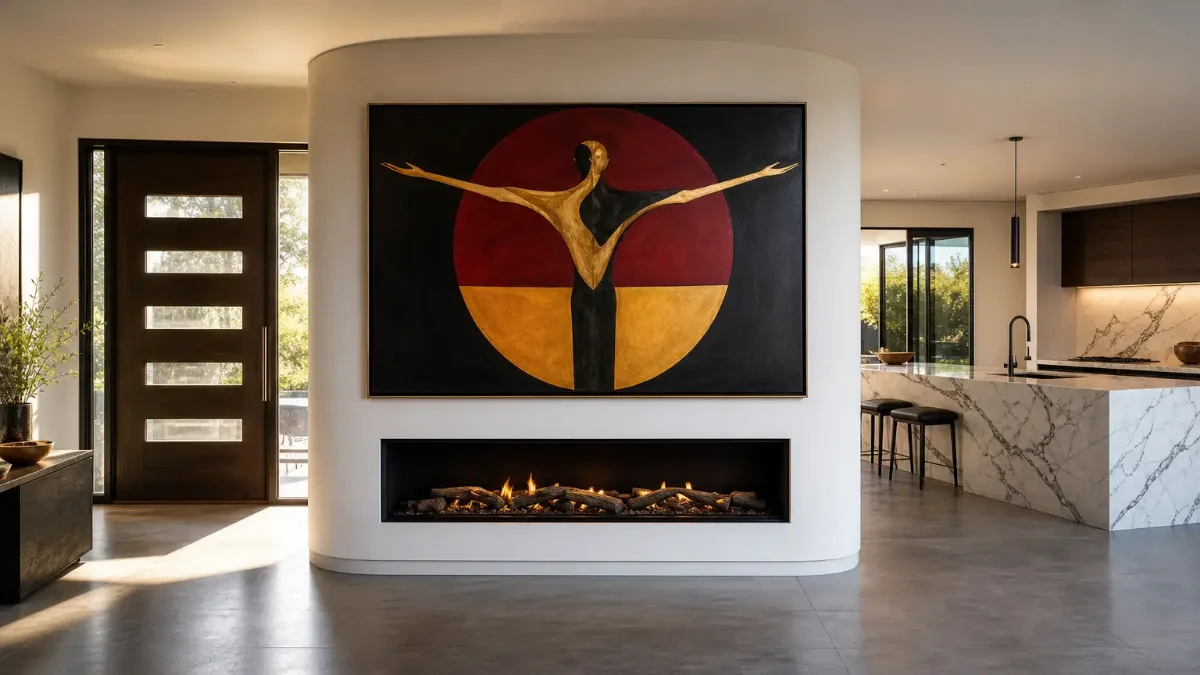
Every wall gets its own piece
One picture repeated through a house is wallpaper, not a collection. So each display gets its own work, generated from the same description, every one a different reading of it. The result hangs together like a set instead of looking like a screensaver.
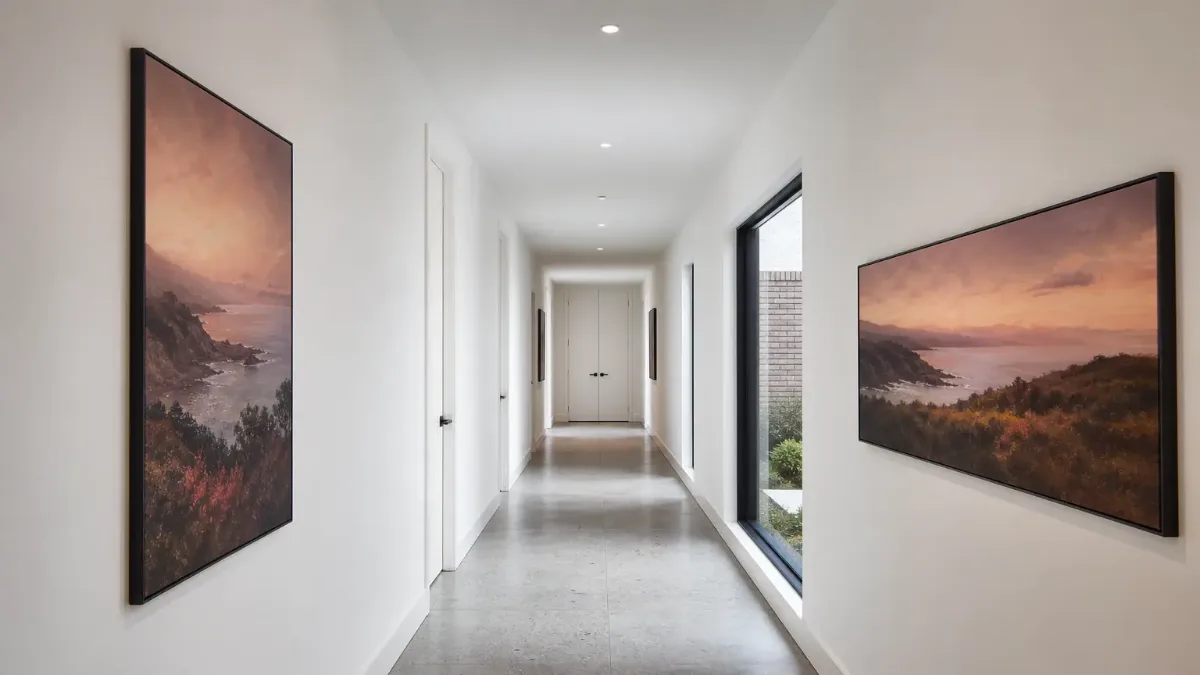
Portrait screens get portrait art
The Frames are mounted both ways round, some upright and some on their side. Squeezing a wide picture into an upright frame cuts the composition in half and looks it, so upright screens are given art drawn to that shape, and wide screens are given art drawn to theirs. Every piece is made to fit the screen it lands on.
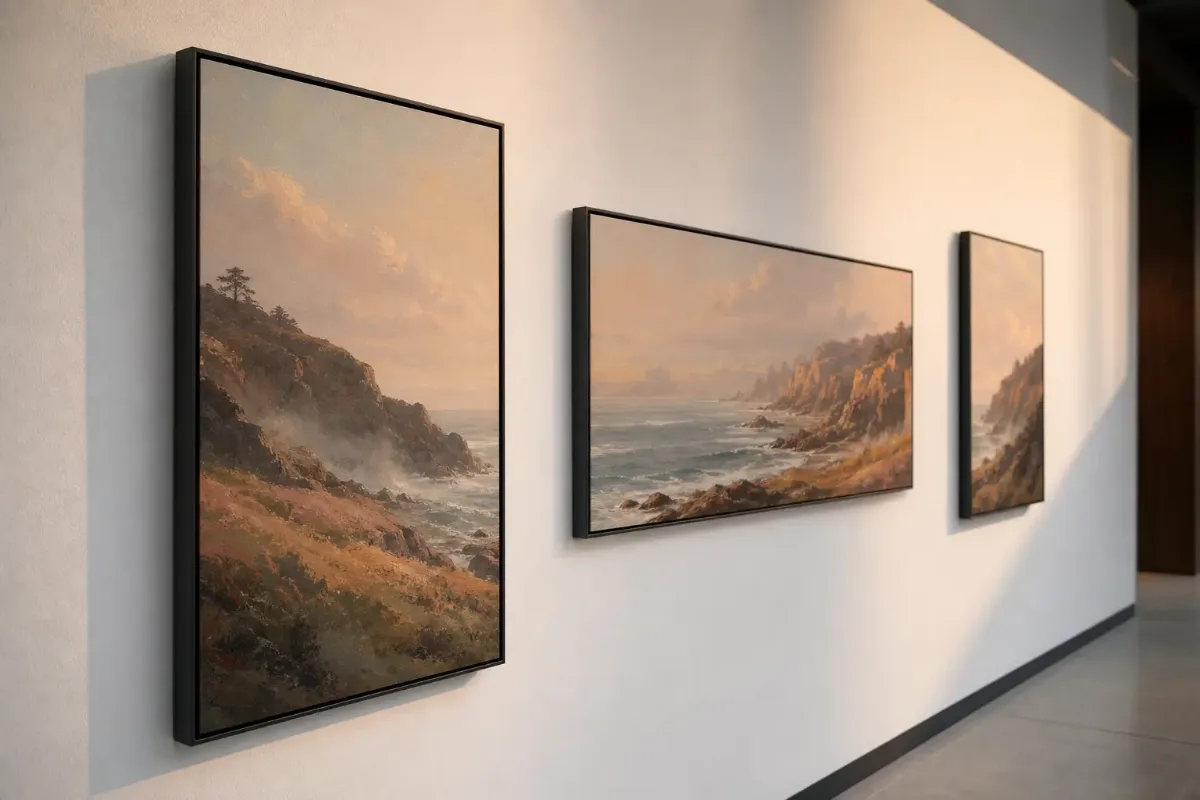
On demand, or on a schedule
He can rehang everything there and then, or leave it to change on a schedule and find something different waiting for him. A set he likes can be saved and hung again later, and any piece can be downloaded, so a favourite is not lost the moment the walls move on.
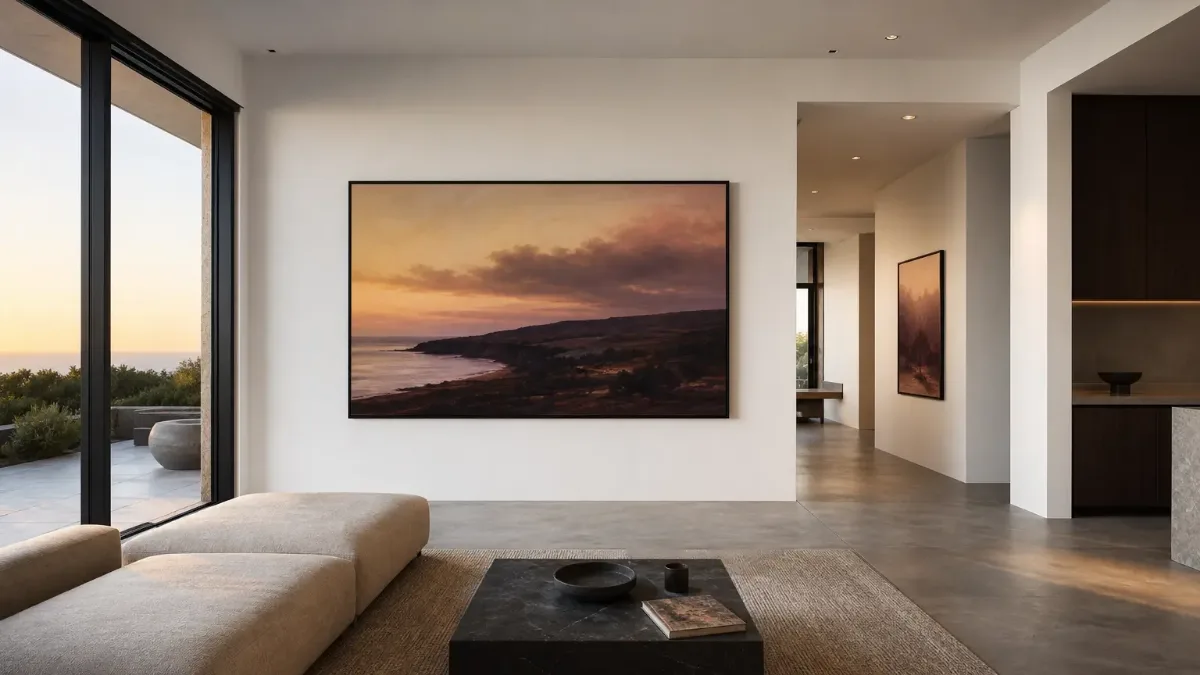
Works from any device, anywhere
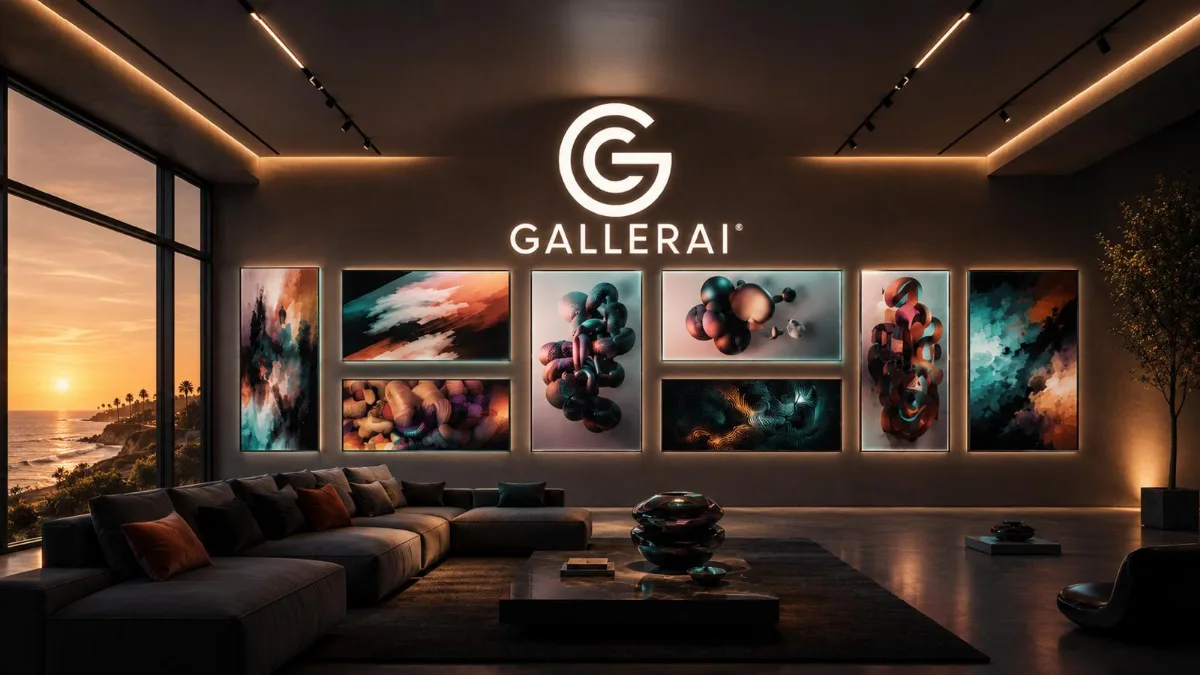
There is no remote and nothing to plug in. It is a web interface, so it works from the sofa, the study, or the other side of the world. A link can be shared with a guest at dinner, and they can choose the theme themselves. This is what greets them when they open it.
The result
About a minute after typing a description, every display in the house is showing art that did not exist when he sat down. Bored of it by the weekend? Describe something else.
It has been running for two years without a fault, and it has quietly improved over that time. As Ideogram's models have got better, so has the art on the walls, with nothing to change at the house.
Most of what I build saves someone time or money. This one just made a house a more interesting place to stand in, and that turned out to be reason enough.
If you can think of it, I can build it.
Nobody had made this before I was asked for it. Your idea is probably more ordinary than a house that repaints itself, and that is fine. Tell me what you want it to do and I will tell you honestly whether it can be done.
Get in touchHow it is put together
- A server driving a client at each display, a custom web front end on top of it, and Ideogram's API doing the generation
- I built and configured the server, the clients and the whole software stack, an installer mounted the displays on site, and I deployed and set it up remotely. I have never been to the house
- Two years in service, upgraded along the way as the image models improved